Saturday, April 8, 2023

Day 8 2023 ~ How to write a Senses Poem for “30 poems in 30 days” for #NationalPoetryMonth


Well, now that it’s finally starting to feel like spring, this is a good time to write a poem according to our “senses.” Enjoy!

You can have lots of fun with this poem and its variations. There is no need to worry about rhyming or counting syllables, although it does have other requirements (basically just to “fill in the blanks”) and it can be pulled together in several ways – try each of them, if you wish, or just choose one way to share your poem.

So first, everyone is familiar with the “FIVE SENSES” ~ sight, smell, hear, touch, and taste. 

But many have argued that there are SIX SENSES if you consider your mind ("I think") as one of the senses. 

Hence, we are writing a FIVE SENSES and/or SIX SENSES POEM today!! Cheers!!

Chose a topic and describe it using each of your six senses, one per line/

Here is a SIX SENSES format to follow, BUT feel free to rearrange the order the various senses you use to describe your object/topic.


1.    I see ____________________________

2.    I smell ___________________________

3.    I hear ___________________________

4.    I feel (as in touch) __________________

5.    I taste ____________________________

6.    I think ____________________________


Now, if you want to concentrate on the FIVE SENSES – you can change “I see” to "It looks like," etc.


It looks like (instead of I see) _________________

2.    It smells like _______________________________

3.    It sounds like (instead of I hear) _______________

4.    It feels like _________________________________

5.    It tastes like ________________________________


*Artwork by Stephanie Abney © (Yeah, I know - there's not a poem about a bunny, but I love this one I did, and with spring and all, I wanted to share it, so . . . )

So, you CAN just leave it like it is once you fill in the blanks (in any order using either five or six senses) and remove the numbers; you don’t need those. That will give you a great poem by just doing that.

OR you can remove most of the PRONOUNS, VERBS, and ARTICLES and get a new effect.

Think of a place that is special. Form an image in your mind of this place. Then complete the following statements.

Here’s my example, taken step-by-step. 

(I grew up in southern California and would go to the beach every chance I got)  . . .


First – fill in the blanks: 

1.       I see ______________   the breaking waves

2.       I smell _____________  the seaweed-tinged air

3.       I hear ______________  the seagulls squawking overhead

4.       I feel (as in touch) ____  the wet sand squishing between my toes

5.       I taste ______________  the salty ocean water

6.       I think ______________  I’m back in my childhood heaven


OK, so, if I remove the line numbers and get rid of the lines it turns out like this:

I see the breaking waves
I smell the seaweed-tinged air
I hear the seagulls squawking overhead
I feel the wet sand squishing between my toes
I taste the salty ocean water
I think I’m back in my childhood heaven

                         © 2017 Stephanie Abney


And that makes a nice poem BUT, if I remove most of the pronouns, verbs, and articles, then I get this one; also a very nice poem:


breaking waves
seaweed-tinged air
seagulls squawking overhead
 wet sand squishing between my toes
salty ocean water
my childhood heaven
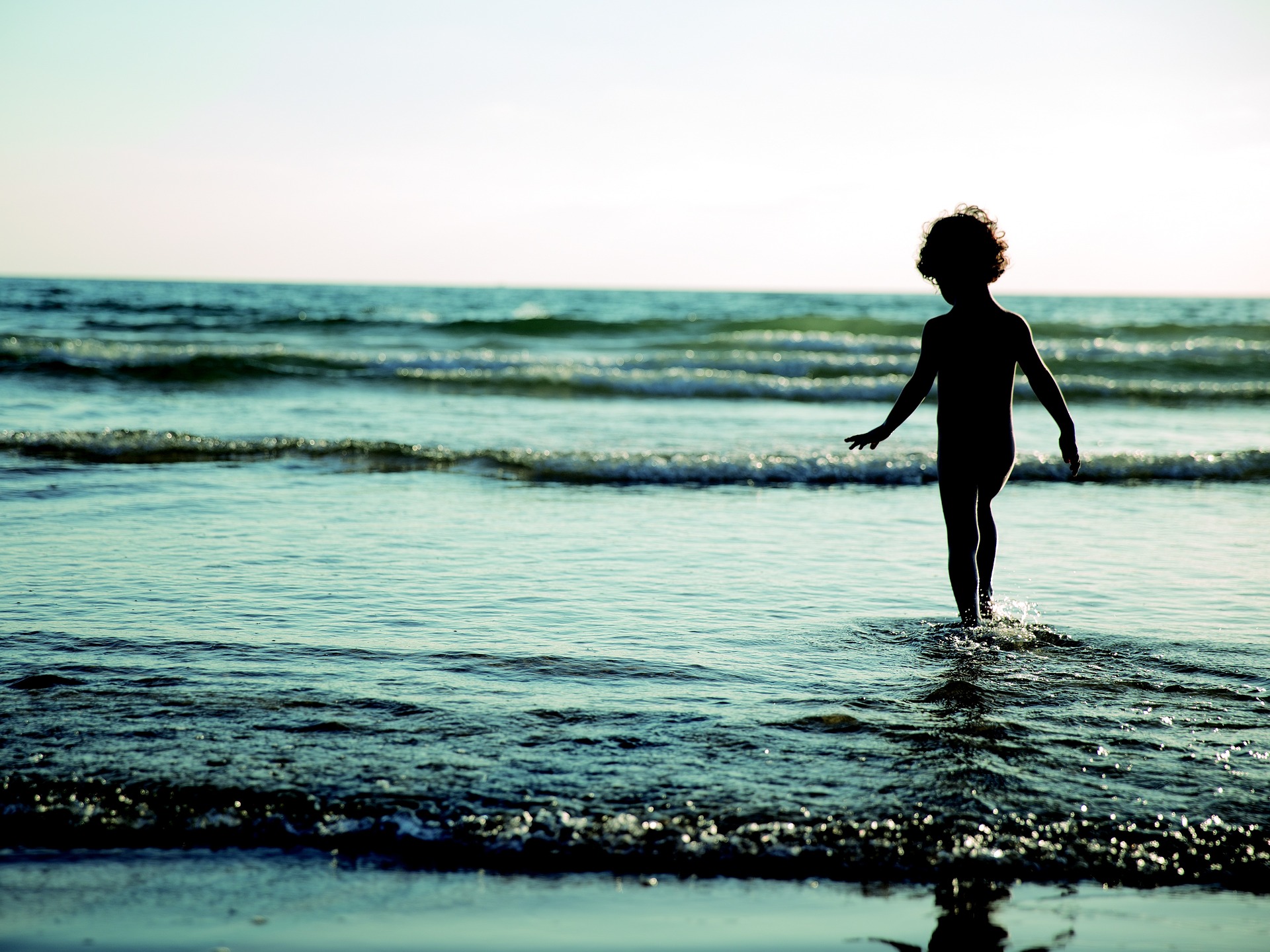
                           

                                           © 2017 Stephanie Abney


And that makes a new version of the same poem and it’s pretty cool as well. 

OR you can use the other format with FIVE senses and follow the same steps; fill in the blanks, then take away the numbers and even remove the pronouns, select verbs and articles and see what you get:


  It looks like (instead of I see) _________________

2.    It smells like _______________________________

3.    It sounds like (instead of I hear) _______________

4.    It feels like _________________________________

5.    It tastes like ________________________________


So, there are a few different ways to approach this type of poem. Enjoy!!


PLEASE REMEMBER ~ any poetry found on this blog, written by me, is my personal property and may not be used without my permission, other than sharing it as an example in a lesson or to read it to someone. The same goes for any poems that are shared in the comments of this blog or elsewhere online as a result of this challenge. They are the creative property of the person who writes them. These poems are their original work and no one may use them without their permission. It is understood that they own the copyright to them as soon as they create them and especially once they post them. Thanks so much!

*** Also, if you choose to post your poems on your own blog or elsewhere on social media ~ that’s awesome. But PLEASE don’t just copy and paste my daily instructions, but rather post your poem on your blog or your FB wall or wherever AND LINK BACK TO EACH DAY’S SPECIFIC BLOG POST for others to come here to read the instructions. I’ve spent considerable time researching the poetry forms and writing them up to share with you. Thanks for respecting my work.


Friday, April 7, 2023

Day 7 ~ “Pleiades Poem” for “30 Poems in 30 Days” #NationalPoetryMonth

Today’s poetry form might be another new one for many of you. Have you ever heard of or tried writing a Pleiades Poem? It was created in 1999 by Craig Tigerman, Editor Emeritus of Sol Magazine, which appears to have been a poetry journal that is no longer in publication. At any rate, he named it for a star cluster in the constellation Taurus, “The Pleiades.”

It has some interesting requirements: ONE word ONLY title with a single seven-line stanza (so don’t go creating additional verses – this form only has one). Here’s the specific part ~ the FIRST letter of each of the following 7 lines MUST start with the same letter as the first letter of the title of the poem. Kind of reminds me of those families who named every one of their kids with names that begin with the same letter.

We will write ours as Craig Tigerman first designed it (others have tried to add syllable requirements, etc.) but Tigerman only said it HAD to be a single-word title, with seven lines, each line beginning with the same first letter as the title. So don't go changin' it, okay? 

If you want some help coming up with words that start with the same letter you can go here ~ Word Finder and choose your letter and find lots of words that start with that letter:

Another useful site: Dictionary of Unusual Words – just click on the letter of your choice and you get a plethora of unique words with brief definitions.

Oh, the examples I saw online have the first line start with a capital letter and the rest start with a lowercase letter, and the final line ends with a period. (You can insert commas where needed). So, here ya’ go ~ a few examples:


I wrote this one today:


Stars

Shooting stars,
self-luminous sequins,
sparkling in the night,
spanning space and
sky waiting for my wish,
scintillating anticipation,
shimmering through my soul.

        Stephanie Abney © 2023

(artwork by Stephanie Abney©)


Cucumbers

Crinkley edges,
crunchy, crisp and
creeping vine bearing
cucumiform fruits,
cultivated plant,
comes from the gourd family,
cucurbitaceae.

      © 2018 Stephanie Abney


Sleep

Something that
seems to evade me,
slumbering a little here,
snoozing a bit there, ol’ Mr.
Sandman passes me by,
singing lullabies to others,
shoot, there goes my alarm!

                      © 2018 Stephanie Abney


(cucumber image from Pixabay - free use)

PLEASE REMEMBER ~ any poetry found on this blog, written by me, is my personal property and may not be used without my permission, other than sharing it as an example in a lesson or to read it to someone. The same goes for any poems that are shared in the comments of this blog or elsewhere online as a result of this challenge. They are the creative property of the person who writes them. These poems are their original work and no one may use them without their permission. It is understood that they own the copyright to them as soon as they post them. Thanks so much!

Also, if you choose to post your poems on your own blog ~ that’s awesome. But PLEASE don’t just copy and paste my daily instructions, but rather post your poem on your blog or your FB wall or wherever AND LINK BACK TO THIS SPECIFIC BLOG POST for others to come here to read the instructions. I’ve spent considerable time researching the poetry forms and writing them up to share with you. Thanks for respecting my work.


Thursday, April 6, 2023

Day 6 2023 - How to write a “What if . . . I might” poem

Y'all are doing great!! This is a fun one . . .

It's basically a “finish the sentence” type of poetry form.


This is a poem that will get you thinking of many possibilities; some thoughtful, others silly, some adventurous, or even fanciful, some surprisingly profound. Let your imagination go or reach deep into your heart. 

SEVEN LINES:

Fill in the blanks any way you want – changing the words you can create dozens of poems. 

No rhyming required unless you choose to rhyme any of the words.

Line #1:  What if ____________________________
Line #2:  I might ____________________________

(leave a space between lines 2 & 3)

Line #3:  What if ____________________________
Line #4:  I could _____________________________

(leave a space between lines 4 & 5)

Line #5:  What if ____________________________
Line #6:  I would_____________________________

(leave a space between lines 6 & 7)

Line #7:  Ask a question.


Here’s a wonderful example poem from a delightful participant in a poetry workshop I presented a few years ago (used with permission):


What if I kissed a big fat frog?
I might gain a rich handsome prince.

What if I took the big frog home?
I might live happily after, since

What if he did become a prince?
I might be quite famous, I ken*;

But then I’d have to consider:
I might have to kiss him again. 
_______________________________
  *ken: Scottish vernacular for “know”


                             © 2019 Buckshot Dot 


Here’s one I wrote years ago: 

What if I danced in the rain?
I might get a little bit wet.

What if I sang at the top of my lungs?
I could land a singing contract, I bet.

What if I went back inside and sat down?
I would never know what I might do.

I wonder, would you be so bold, if it were you?

                           © 2011 Stephanie Abney


PLEASE REMEMBER ~ any poetry found on this blog, written by me, is my personal property and may not be used without my permission, other than sharing it as an example in a lesson or to read it to someone. The same goes for any poems that are shared in the comments of this blog or elsewhere online as a result of this challenge. They are the creative property of the person who writes them. These poems are their original work and no one may use them without their permission. It is understood that they own the copyright to them as soon as they post them. Thanks so much!

Also, if you choose to post your poems on your own blog ~ that’s awesome. But PLEASE don’t just copy and paste my daily instructions, but rather post your poem on your blog or your FB wall or wherever AND LINK BACK TO THIS SPECIFIC BLOG POST for others to come here to read the instructions. I’ve spent considerable time researching the poetry forms and writing them up to share with you. Thanks for respecting my work.

Wednesday, April 5, 2023

Day 5 ~ Windspark Poem for “30 poems in 30 days" #NationalPoetryMonth


Y’all are doing great!! Fun stuff, right?

So today let’s do one I’ve become rather fond of. It’s a rather simple little 5-line poem with VERY SPECIFIC GUIDELINES. Its simplicity is its beauty. This is also an easy and fun poetic form to use with children.

Here is the format for a Windspark poem:

Line 1 ~ “I dreamed” (that’s it – just write I dreamed and do not add anything)

Line 2 ~ “I was a/the _______” (you fill in the blank, generally a one-word noun)

Line 3 ~ where/location (keep it short: in the … on a … at the …) wherever

Line 4 ~ action (use an “ing” verb with just a few more words to describe the action)

Line 5 ~ adverb (use only ONE word – an adverb with a “ly” ending)

It’s like 1:30am on Wednesday and I’m bet – I’ll share a couple of examples I wrote a few years back. And I will try to write a new one with the rest of you during the day and come back and add it in. Cheers!!

Here are a couple of examples:


I dreamed
I was a butterfly
In a garden
Dancing in the wind
Gracefully 

          © 2019 Stephanie Abney


   I dreamed
   I was the sun
   High in the sky
   Watching over the world
   Regally          

             © 2019 Stephanie Abney


artwork by Stephanie Abney © 


PLEASE REMEMBER ~ any poetry found on this blog, written by me, is my personal property and may not be used without my permission, other than sharing it as an example in a lesson or to read it to someone. The same goes for any poems that are shared in the comments of this blog or elsewhere online as a result of this challenge. They are the creative property of the person who writes them. These poems are their original work and no one may use them without their permission. It is understood that they own the copyright to them as soon as they create them and especially once they post them. Thanks so much!

*** Also, if you choose to post your poems on your own blog or elsewhere on social media ~ that’s awesome. But PLEASE don’t just copy and paste my daily instructions, but rather post your poem on your blog or your FB wall or wherever AND LINK BACK TO EACH DAY’S SPECIFIC BLOG POST for others to come here to read the instructions. I’ve spent considerable time researching the poetry forms and writing them up to share with you. Thanks for respecting my work.


Tuesday, April 4, 2023

Day 4 2023 ~ How to write a quatrain poem for “30 Poems in 30 Days” #NationalPoetryMonth

For the 4th day of our challenge, let’s write a poem that has FOUR lines!! Cool.

Lots of poems fit that requirement but we will do a “quatrain” today. The word quatrain is derived from the French word for the number four: quatre


Every poet should know how to write a quatrain as it is the basis of a number of other poetry styles. Quatrain poems can be one stand-alone 4-line poem OR you can string two or more together to create a longer poem, BUT you will want to stay in the same rhyming pattern (like ABAB – see more on that further on). . .

BUT it’s not quite as easy as it sounds. There are very specific guidelines to follow. And this format is full of OPTIONS – so please pay attention:

Obviously, it has four lines. Each quatrain has four lines with a specific rhyming pattern, BUT there are lots of rhyming patterns out there. Basically, depending on which source you check, ANY of 12 patterns can work, but the lines with ending words that rhyme SHOULD have the same number of syllables as each other. The most common are AAAA, AABB and ABAB.

SO, if lines 1 & 3 rhyme, and lines 2 & 4 rhyme, you would have an ABAB rhyming pattern. (Each set of rhyming lines should have the same number of syllables).

OR, if lines 1 & 2 rhyme, and lines 3 & 4 rhyme, you would have an AABB rhyming pattern. (Again, rhyming lines should have the same number of syllables).

The actual “quatrain” is ONE verse – but you can always string a bunch of them together to create a “quatrain poem” which can have any number of quatrains in it, including just one. (You can do this if you are ambitious – but one, two, or three individual quatrains would be great for today).


In fact, you most likely already have a quatrain poem memorized. “Roses are Red” would be a prime example of a quatrain, with an ABCB pattern.


You can also use an AAAA, an AABB, or AABA, or BBCB or basically whatever – but the ending words should rhyme with each other in one pattern or another and whichever ones rhyme with each other, should have the same number of syllables.


Many hymns are quatrains and most of Emily Dickenson’s poems were made up of quatrains.


It may sound like a lot to think about but most Nursery Rhymes are quatrains – it’s not that hard ~ give it a shot. J


EXAMPLES:


He drew a circle that shut me out--
Heretic, rebel, a thing to flout.
But Love and I had the wit to win:
We drew a circle that took him in.

    --Edwin Markham (American Poet, April 23, 1852 – March 7, 1940)


Here’s an old quatrain of mine ~ It has an AABB pattern and lines 1 & 2 are 8 syllables while lines 3 & 4 are 7 syllables:


You wonder where I’ve been all day.

I must admit, it’s hard to say.

Over here and over there.

I guess I’ve been everywhere.

       © 2014 Stephanie Abney


artwork by Stephanie Abney © 


And here’s a 2-verse quatrain poem AABB pattern that I wrote last year.

It seems I have raging A.D.D.
My “to-do” list is a sight to see.
I start one thing, then switch to something new.
I am exhausted when the day is through!
 
There are ways I have learned to cope,
I sort things in a different tote.
One for reading and one for art,
I’ve so many totes, where to start?
 

        © 2022 Stephanie Abney


Okay – whatcha’ got for quatrains?


PLEASE REMEMBER ~ any poetry found on this blog, written by me, is my personal property and may not be used without my permission, other than sharing it as an example in a lesson or to read it to someone. The same goes for any poems that are shared in the comments of this blog or elsewhere online as a result of this challenge. They are the creative property of the person who writes them. These poems are their original work and no one may use them without their permission. It is understood that they own the copyright to them as soon as they create them and especially once they post them. Thanks so much!

*** Also, if you choose to post your poems on your own blog or elsewhere on social media ~ that’s awesome. But PLEASE don’t just copy and paste my daily instructions, but rather post your poem on your blog or your FB wall or wherever AND LINK BACK TO EACH DAY’S SPECIFIC BLOG POST for others to come here to read the instructions. I’ve spent considerable time researching the poetry forms and writing them up to share with you. Thanks for respecting my work.


Monday, April 3, 2023

Day 3 ~ “Naani Poem” for “30 Poems in 30 Days” #NationalPoetryMonth

I stumbled across this poetry form about three years ago. It was completely new to me and I imagine the same will be true for many of you (unless you followed the challenge in 2020). I love Indian food, so why not Indian poetry? 

Naani is one of India’s most popular poetry forms. “Naani” basically means an “expression of one and all.” It was created by well-known Indian poet, Dr N. Gopi, the vice-chancellor to Telugu University.

There are only TWO rules to this poem –

It is FOUR lines long, no more, no less.

And when you count up ALL of the syllables in ALL four lines, there should be AT LEAST 20 syllables and NO MORE than 25 syllables for the ENTIRE 4-lines.

And there is no rhyming required but of course, you are free to rhyme whenever you wish. Either way . . .

Sounds easy enough, but accomplishing that may be harder than you think.

Although no subject matter requirements are suggested, from everything I read, Naani poems generally are about relationships, the current state of affairs, the human condition, and emotions. So, basically, you’re wide open here.

One more thing, the first line usually – but not always – states the subject of the poem. Therefore these poems do not have titles.

I highly suggest you use that handy, dandy free online syllable counter ~ all you have to do is plop your entire 4 line poem into the box, click the “Count Syllables” bar at the bottom of the box and it will count them for you ~ remember you are looking to have at least 20 but no more than 25 syllables per Naani poem. Cheers!!

How Many Syllables - Free OnlineSyllable Counter

So, here’s one I wrote during the pandemic:

Day in and out
I sit inside and wonder
Will things ever
Get back to normal
                 © Stephanie Abney 2020


And I came up with this one today:

Strive to be pleasant,
Make peace, rather than contention,
Change the world,
One kindness at a time.
                        © Stephanie Abney 2023


Artwork is by Stephanie Abney ©

PLEASE REMEMBER ~ any poetry found on this blog, written by me, is my personal property and may not be used without my permission, other than sharing it as an example in a lesson or to read it to someone. The same goes for any poems that are shared in the comments of this blog or elsewhere online as a result of this challenge. They are the creative property of the person who writes them. These poems are their original work and no one may use them without their permission. It is understood that they own the copyright to them as soon as they create them and especially once they post them. Thanks so much!

*** Also, if you choose to post your poems on your own blog or elsewhere on social media ~ that’s awesome. But PLEASE don’t just copy and paste my daily instructions, but rather post your poem on your blog or your FB wall or wherever AND LINK BACK TO EACH DAY’S SPECIFIC BLOG POST for others to come here to read the instructions. I’ve spent considerable time researching the poetry forms and writing them up to share with you. Thanks for respecting my work.

Sunday, April 2, 2023

Day 2 2023 ~ How to write an “ing Poem” for “30 Poems in 30 Days” #NationalPoetryMonth

Well, y’all are off to a great start. Since it’s early in the month, let’s go for super simple today – however, a simple poetry form can be deceiving – some rather profound poems can be produced with some very simple formats.

Today we are going to write an “ing” Poem ~ yep, an “ing” Poem

So, basically, you choose a noun (seasons and animals make good choices, but any noun that comes to mind will be great) and then list 4-6 (give or take) verbs associated with that noun and add “ing” to them. Give it a try – perhaps, create several “ing” poems.

Like this:

NOUN

verb +ing

verb +ing

verb +ing

verb +ing

verb +ing


Here’s an example:


Grandchildren
Laughing
Loving
Caring
Sharing
Growing
Playing

                   © 2016 Stephanie Abney

Here’s another example:


Paradigm Shift

Wondering
Thinking
Reading
Listening
Considering
Challenging
Understanding
Becoming

          © 2022 Stephanie Abney


What do you think? When I was teaching, I loved to highlight whatever “National Day” it was whenever possible. The kids got a kick out of it. Sometimes doing that makes a fun prompt on what direction to take your poem. So, just FYI ~ April 2nd is:

“International Children's Book Day,” “National Ferret Day,” “National Love Your Produce Manager Day,” “National Peanut Butter and Jelly Day,” “Reconciliation Day,” and “World Autism Day,” to mention a few. So, you can focus on one of these or make up your own prompt. Have fun!

Your turn!! Cheers!!


PLEASE REMEMBER ~ any poetry found on this blog, written by me, is my personal property and may not be used without my permission, other than sharing it as an example in a lesson or to read it to someone. The same goes for any poems that are shared in the comments of this blog or elsewhere online as a result of this challenge. They are the creative property of the person who writes them. These poems are their original work and no one may use them without their permission. It is understood that they own the copyright to them as soon as they create them and especially once they post them. Thanks so much!

*** Also, if you choose to post your poems on your own blog or elsewhere on social media ~ that’s awesome. But PLEASE don’t just copy and paste my daily instructions, but rather post your poem on your blog or your FB wall or wherever AND LINK BACK TO EACH DAY’S SPECIFIC BLOG POST for others to come here to read the instructions. I’ve spent considerable time researching the poetry forms and writing them up to share with you. Thanks for respecting my work.

Saturday, April 1, 2023

Day 1 2023 ~ How to write a Couplet for #NationalPoetryMonth -"30 poems in 30 days"


Yay!! April 1st is the beginning of National Poetry Month!

Welcome to YEAR 11 of my month-long poetry challenge in honor of “National Poetry Month.”

There are many forms of poetry. Too many people claim they cannot write poetry but I beg to differ. That is why I started this challenge, to teach others how to write a variety of poems with easy-to-follow instructions. So far, I have found more than a hundred different poetry “forms” and have featured at least 78 different ones over the years. This challenge is fun and easy – even kids can and do join in.

So, first, since new people seem to join each year, here are some basic things to know, and then the following posts SHOULD be shorter, but I like details so short and brief are relative words for me, but I’ll try!!

I also host a private FB Poetry Month group; if you are interested in that, you will need to contact me and request an “invite” to it. 

Why write poems? Writing poetry causes us to think differently about words. Due to the condensed nature of most poetry, we think carefully about word choice, evaluate each word in order to tell a story, express our emotions, describe a moment, or a memory. It allows us to reveal ourselves in ways we may have never expected. I love this quote I found on Writers Write ~ “Poems act as a filter and help us get to the guts of the matter.”

Most of the poems we will do this month have rather specific rules. This is a good thing. They are a guide and can help you express yourself in the most unexpected ways, but then again, when you write poetry, you can also break the rules if it serves the poem. However, I recommend for the purpose of our time together that you avoid breaking the rules. Following them will teach you a number of different ways to write poetry. You can always break them later, on your own.

Okay, enough of my rambling – let’s get started!! Yay!!

Our first poem this year is rather simple ~ the COUPLET ~ every poet should know how to write a couplet. It is the basis of other poems and it’s only TWO lines of poetry. How easy is that?

Although I’ve seen some that are totally random, the dictionary definition of a “couplet” suggests that they usually consist of two lines that rhyme and have the same meter (syllable count). Although in the spirit of “full disclosure,” they do not need to have the same meter. Gasp! In fact, if you opt for what is called an “unrhymed couplet” they don’t even need ending rhyming words. So, there is a little wiggle room when it comes to couplets.

Try expressing your complete thought in two mid-sized poetic lines. The last words traditionally rhyme. And just for fun, TRY to keep both lines to the same syllable count (meter, basically).

It can be spiritual, silly, romantic or whatever suits your fancy – couplets are great to write for children or with children.

And you can always string a bunch of couplets together to create a longer poem, but for today – just try creating one or more individual 2-line couplets, unless you are bound and determined to make a longer poem.

Just a few more explanations when it comes to couplets: when a couplet can stand alone from the rest of the poem, it is considered independent, and it is called a “closed couplet.” Conversely, a couplet that cannot stand alone without the rest of the poem is an “open couplet.”

Just in case you were wondering, there actually are quite a variety of couplets – if you feel so inclined to research them – here are a few: Heroic Couplet, Unrhymed Couplet, Blank Verse Couplet, Short Couplet, Split Couplet, Qasida, Alexandrine Couplet, Shakespearean Couplet, and Chinese Couplet. No doubt there are more, but that’s a start.

And to simplify things – here is a handy dandy free online syllable counter: (be sure to click "Count Syllables)." Cheers!!

OK, for example, here are a couple of couplets (hee hee) that I wrote; one last year and one two years ago:


I have so many things “on my plate,”

Please forgive me if I’m running late.
                         © 2021 Stephanie Abney


I am such a work in progress,
Some days I do more, others less
                         © 2022 Stephanie Abney


AND, for variety, here are a couple more couplets (one from a participant, used with permission).


My puppy chews on everything
But mostly tugs at my heartstrings.
                               © 2017 Andilyn Jenkins
 

I know the Lord is mindful of me,
And it makes me happy as can be.
                             © 2011 by Stephanie Abney
 

Okay – your turn!! You are welcome to share your poems in the comments to this blog post. I hope you will share them online in our FB poetry group. Most people enjoy sharing them on their own FB or IG accounts. I also hope you are keeping them in a journal or a file on your computer. Enjoy!!

PLEASE REMEMBER ~ any poetry found on this blog, written by me, is my personal property and may not be used without my permission, other than sharing it as an example in a lesson or to read it to someone. The same goes for any poems that are shared in the comments of this blog or elsewhere online as a result of this challenge. They are the creative property of the person who writes them. These poems are their original work and no one may use them without their permission. It is understood that they own the copyright to them as soon as they create them and especially once they post them. Thanks so much!

*** Also, if you choose to post your poems on your own blog or elsewhere on social media ~ that’s awesome. But PLEASE don’t just copy and paste my daily instructions, but rather post your poem on your blog or your FB wall or wherever AND LINK BACK TO EACH DAY’S SPECIFIC BLOG POST for others to come here to read the instructions. I’ve spent considerable time researching the poetry forms and writing them up to share with you. Thanks for respecting my work.