Monday, April 3, 2023

Day 3 ~ “Naani Poem” for “30 Poems in 30 Days” #NationalPoetryMonth

I stumbled across this poetry form about three years ago. It was completely new to me and I imagine the same will be true for many of you (unless you followed the challenge in 2020). I love Indian food, so why not Indian poetry? 

Naani is one of India’s most popular poetry forms. “Naani” basically means an “expression of one and all.” It was created by well-known Indian poet, Dr N. Gopi, the vice-chancellor to Telugu University.

There are only TWO rules to this poem –

It is FOUR lines long, no more, no less.

And when you count up ALL of the syllables in ALL four lines, there should be AT LEAST 20 syllables and NO MORE than 25 syllables for the ENTIRE 4-lines.

And there is no rhyming required but of course, you are free to rhyme whenever you wish. Either way . . .

Sounds easy enough, but accomplishing that may be harder than you think.

Although no subject matter requirements are suggested, from everything I read, Naani poems generally are about relationships, the current state of affairs, the human condition, and emotions. So, basically, you’re wide open here.

One more thing, the first line usually – but not always – states the subject of the poem. Therefore these poems do not have titles.

I highly suggest you use that handy, dandy free online syllable counter ~ all you have to do is plop your entire 4 line poem into the box, click the “Count Syllables” bar at the bottom of the box and it will count them for you ~ remember you are looking to have at least 20 but no more than 25 syllables per Naani poem. Cheers!!

How Many Syllables - Free OnlineSyllable Counter

So, here’s one I wrote during the pandemic:

Day in and out
I sit inside and wonder
Will things ever
Get back to normal
                 © Stephanie Abney 2020


And I came up with this one today:

Strive to be pleasant,
Make peace, rather than contention,
Change the world,
One kindness at a time.
                        © Stephanie Abney 2023


Artwork is by Stephanie Abney ©

PLEASE REMEMBER ~ any poetry found on this blog, written by me, is my personal property and may not be used without my permission, other than sharing it as an example in a lesson or to read it to someone. The same goes for any poems that are shared in the comments of this blog or elsewhere online as a result of this challenge. They are the creative property of the person who writes them. These poems are their original work and no one may use them without their permission. It is understood that they own the copyright to them as soon as they create them and especially once they post them. Thanks so much!

*** Also, if you choose to post your poems on your own blog or elsewhere on social media ~ that’s awesome. But PLEASE don’t just copy and paste my daily instructions, but rather post your poem on your blog or your FB wall or wherever AND LINK BACK TO EACH DAY’S SPECIFIC BLOG POST for others to come here to read the instructions. I’ve spent considerable time researching the poetry forms and writing them up to share with you. Thanks for respecting my work.

Sunday, April 2, 2023

Day 2 2023 ~ How to write an “ing Poem” for “30 Poems in 30 Days” #NationalPoetryMonth

Well, y’all are off to a great start. Since it’s early in the month, let’s go for super simple today – however, a simple poetry form can be deceiving – some rather profound poems can be produced with some very simple formats.

Today we are going to write an “ing” Poem ~ yep, an “ing” Poem

So, basically, you choose a noun (seasons and animals make good choices, but any noun that comes to mind will be great) and then list 4-6 (give or take) verbs associated with that noun and add “ing” to them. Give it a try – perhaps, create several “ing” poems.

Like this:

NOUN

verb +ing

verb +ing

verb +ing

verb +ing

verb +ing


Here’s an example:


Grandchildren
Laughing
Loving
Caring
Sharing
Growing
Playing

                   © 2016 Stephanie Abney

Here’s another example:


Paradigm Shift

Wondering
Thinking
Reading
Listening
Considering
Challenging
Understanding
Becoming

          © 2022 Stephanie Abney


What do you think? When I was teaching, I loved to highlight whatever “National Day” it was whenever possible. The kids got a kick out of it. Sometimes doing that makes a fun prompt on what direction to take your poem. So, just FYI ~ April 2nd is:

“International Children's Book Day,” “National Ferret Day,” “National Love Your Produce Manager Day,” “National Peanut Butter and Jelly Day,” “Reconciliation Day,” and “World Autism Day,” to mention a few. So, you can focus on one of these or make up your own prompt. Have fun!

Your turn!! Cheers!!


PLEASE REMEMBER ~ any poetry found on this blog, written by me, is my personal property and may not be used without my permission, other than sharing it as an example in a lesson or to read it to someone. The same goes for any poems that are shared in the comments of this blog or elsewhere online as a result of this challenge. They are the creative property of the person who writes them. These poems are their original work and no one may use them without their permission. It is understood that they own the copyright to them as soon as they create them and especially once they post them. Thanks so much!

*** Also, if you choose to post your poems on your own blog or elsewhere on social media ~ that’s awesome. But PLEASE don’t just copy and paste my daily instructions, but rather post your poem on your blog or your FB wall or wherever AND LINK BACK TO EACH DAY’S SPECIFIC BLOG POST for others to come here to read the instructions. I’ve spent considerable time researching the poetry forms and writing them up to share with you. Thanks for respecting my work.

Saturday, April 1, 2023

Day 1 2023 ~ How to write a Couplet for #NationalPoetryMonth -"30 poems in 30 days"


Yay!! April 1st is the beginning of National Poetry Month!

Welcome to YEAR 11 of my month-long poetry challenge in honor of “National Poetry Month.”

There are many forms of poetry. Too many people claim they cannot write poetry but I beg to differ. That is why I started this challenge, to teach others how to write a variety of poems with easy-to-follow instructions. So far, I have found more than a hundred different poetry “forms” and have featured at least 78 different ones over the years. This challenge is fun and easy – even kids can and do join in.

So, first, since new people seem to join each year, here are some basic things to know, and then the following posts SHOULD be shorter, but I like details so short and brief are relative words for me, but I’ll try!!

I also host a private FB Poetry Month group; if you are interested in that, you will need to contact me and request an “invite” to it. 

Why write poems? Writing poetry causes us to think differently about words. Due to the condensed nature of most poetry, we think carefully about word choice, evaluate each word in order to tell a story, express our emotions, describe a moment, or a memory. It allows us to reveal ourselves in ways we may have never expected. I love this quote I found on Writers Write ~ “Poems act as a filter and help us get to the guts of the matter.”

Most of the poems we will do this month have rather specific rules. This is a good thing. They are a guide and can help you express yourself in the most unexpected ways, but then again, when you write poetry, you can also break the rules if it serves the poem. However, I recommend for the purpose of our time together that you avoid breaking the rules. Following them will teach you a number of different ways to write poetry. You can always break them later, on your own.

Okay, enough of my rambling – let’s get started!! Yay!!

Our first poem this year is rather simple ~ the COUPLET ~ every poet should know how to write a couplet. It is the basis of other poems and it’s only TWO lines of poetry. How easy is that?

Although I’ve seen some that are totally random, the dictionary definition of a “couplet” suggests that they usually consist of two lines that rhyme and have the same meter (syllable count). Although in the spirit of “full disclosure,” they do not need to have the same meter. Gasp! In fact, if you opt for what is called an “unrhymed couplet” they don’t even need ending rhyming words. So, there is a little wiggle room when it comes to couplets.

Try expressing your complete thought in two mid-sized poetic lines. The last words traditionally rhyme. And just for fun, TRY to keep both lines to the same syllable count (meter, basically).

It can be spiritual, silly, romantic or whatever suits your fancy – couplets are great to write for children or with children.

And you can always string a bunch of couplets together to create a longer poem, but for today – just try creating one or more individual 2-line couplets, unless you are bound and determined to make a longer poem.

Just a few more explanations when it comes to couplets: when a couplet can stand alone from the rest of the poem, it is considered independent, and it is called a “closed couplet.” Conversely, a couplet that cannot stand alone without the rest of the poem is an “open couplet.”

Just in case you were wondering, there actually are quite a variety of couplets – if you feel so inclined to research them – here are a few: Heroic Couplet, Unrhymed Couplet, Blank Verse Couplet, Short Couplet, Split Couplet, Qasida, Alexandrine Couplet, Shakespearean Couplet, and Chinese Couplet. No doubt there are more, but that’s a start.

And to simplify things – here is a handy dandy free online syllable counter: (be sure to click "Count Syllables)." Cheers!!

OK, for example, here are a couple of couplets (hee hee) that I wrote; one last year and one two years ago:


I have so many things “on my plate,”

Please forgive me if I’m running late.
                         © 2021 Stephanie Abney


I am such a work in progress,
Some days I do more, others less
                         © 2022 Stephanie Abney


AND, for variety, here are a couple more couplets (one from a participant, used with permission).


My puppy chews on everything
But mostly tugs at my heartstrings.
                               © 2017 Andilyn Jenkins
 

I know the Lord is mindful of me,
And it makes me happy as can be.
                             © 2011 by Stephanie Abney
 

Okay – your turn!! You are welcome to share your poems in the comments to this blog post. I hope you will share them online in our FB poetry group. Most people enjoy sharing them on their own FB or IG accounts. I also hope you are keeping them in a journal or a file on your computer. Enjoy!!

PLEASE REMEMBER ~ any poetry found on this blog, written by me, is my personal property and may not be used without my permission, other than sharing it as an example in a lesson or to read it to someone. The same goes for any poems that are shared in the comments of this blog or elsewhere online as a result of this challenge. They are the creative property of the person who writes them. These poems are their original work and no one may use them without their permission. It is understood that they own the copyright to them as soon as they create them and especially once they post them. Thanks so much!

*** Also, if you choose to post your poems on your own blog or elsewhere on social media ~ that’s awesome. But PLEASE don’t just copy and paste my daily instructions, but rather post your poem on your blog or your FB wall or wherever AND LINK BACK TO EACH DAY’S SPECIFIC BLOG POST for others to come here to read the instructions. I’ve spent considerable time researching the poetry forms and writing them up to share with you. Thanks for respecting my work.

Saturday, April 30, 2022

Day 30 ~ Tyburn Poem


OK, hold onto your hats!! Woozier! This is beyond tricky, but I think y’all can have lots of fun with it. I decided to end the month with a bang! A nice challenge.  (OH, and if this discourages you – that is NOT my desire – just write any poem you choose and COME BACK NEXT YEAR)!! I do hope a bunch of you will try this one though. It really stretches your skills as poets and writers (and thinkers). So . . .

Tyburn poems are deceiving in that to look at a completed poem, it appears simple enough. Yeah, right! But it was a good exercise. I’ve tried to explain it step by step and even created a little chart to help you out. Plus there are a couple of websites that help with description and rhyming that I think you will find useful.

Here we go:

We are back to counting syllables and lines. This is a SIX-LINE poem and the first 4 lines are EACH a SINGLE DESCRIPTIVE WORD with TWO SYLLABLES, that all RHYME and make sense together. Phew!! We’re not done . . .

The last two lines (5 & 6) are EACH NINE SYLLABLES LONG, and Line 5 incorporates the first two of the words of the poem while Line 6 incorporates the next two of the words of the poem IN A SPECIFIC PLACE.

Line 5 will have 4 syllables (any word count, just FOUR syllables) and then the repeated words from lines 1 and 2 and then Line 6 has 4 syllables (any word count, just FOUR syllables) and then the repeated words from lines 3 and 4 . . . AND then each line ENDS with just ONE word – with only ONE syllable and they have to rhyme with each other (but do not need to rhyme with lines 1-4).

So, if you choose a word that ends in “y” to start off your poem – they will all probably need to end in “y” and if you choose an “ing” ending word, then they will all need to end with “ing” (that’s just for lines 1-4). Better look at the examples AND the chart!

I know you can do it!! Cheers!!

Here is an example I found on the web – it’s rather lite-hearted and cute:

PEANUT BUTTER

Nutty,

Sticky,

Crunchy,

Tasty,

Peanut butter, nutty, sticky spread

With jellied bread, crunchy, tasty fed

                                                                           Copyright © 2016 Charles Sides  

Handy little site to find some “Describing Words” ~ https://describingwords.io/ ~ just plug the word you want to describe and then click the search button.

This site not only helps you find rhyming words, but it separates them into 1 syllable words, 2 syllable words, etc. https://www.rhymer.com/ - RHYMER

Okay, here is my first one:

Poetry

Lyric
Cryptic
Magic
Epic
Poetry month, lyric, cryptic, jots
Share emotions, magic, epic thoughts

                                    © 2019 Stephanie Abney

Below the chart I show, step-by-step, my thought process in writing one of my examples:

Hope this little chart that I created proves helpful ~

# of syllables per line

Rhyming pattern

Meter & where to repeat words

Hints of what should be used per line

2

A

aa

One word adjective with 2 syllables

2

A

bb

Different one word adjective with 2 syllables

2

A

cc

Different one word adjective with 2 syllables

2

A

dd

Different one word adjective with 2 syllables

9

B

xxxxaabbB

Any four syllables then aa, bb, single syllable word

9

B

xxxxccddB

Any four syllables then cc, dd, single syllable word

Tyburn Poetic Form Chart © 2019 Stephanie Abney

Here is my second one:


Satan

Cunning
Lying
Cheating
Tempting
Heartless trickster, cunning, lying, doled
Flattering lies, cheating, sneaking, cold

                                    © 2019 Stephanie Abney

How I tried to figure it out: So, first I made a list of some adjectives (“ing” words) – more than I needed and then another list that could be used in lines 5 & 6 – then I started playing around with it, crossed off the words I didn’t want to use, which left me with 4 descriptive words and then I created lines 5 & 6, incorporating the words from lines 1 & 2 and lines 3 & 4, respectively:

Satan

Cunning

Charming

Lying

Raging

Cheating

Sneaking

Tempting


Words to possibly use in lines 5 & 6: Crafty, jealous, avenging, heartless, destructive, destroy, destroying, bitter, conniving, flatter, flattery, cowardly, trickster, tricking, tricky, malicious, deceitful, cold, sneaky, creepy, creep, reap, reaper, damned, persistent, tenacious, dangerous, rob, steal, louse, angry, anger

And I posted the finished product from this effort just under the chart.

READY? Go try this one out!! Thanks for a great poetry month!! See ya’ next year! Cheers!!

PLEASE REMEMBER ~ any poetry found on this blog, written by me, is my personal property and may not be used without my permission, other than sharing it as an example in a lesson or to read it to someone. The same goes for any poems that are shared in the comments of this blog or elsewhere online as a result of this challenge. They are the creative property of the person who writes them. These poems are their original work and no one may use them without their permission. It is understood that they own the copyright to them as soon as they write them and especially once they post them. Thanks so much!

Also, if you choose to post your poems on your own blog ~ that’s awesome. But PLEASE don’t just copy and paste my daily instructions, but rather post your poem on your blog or your FB wall or wherever AND LINK BACK TO THIS BLOG POST for others to come here to read the instructions. I’ve spent considerable time researching the poetry forms and writing them up to share with you. Thanks for respecting my work and the creative work of others.

Friday, April 29, 2022

 Day 29 – Poem in Your Pocket Day for “30 poems in 30 days” for #NationalPoetryMonth

Today is “National Poem in Your Pocket Day.”  Fun stuff and we will be celebrating it by choosing a poem and carrying it with you today and sharing it with others any way you wish.

And I think it would be AWESOME if the poem you choose is one that YOU wrote! But, any poem is just fine. Or perhaps you will write a new one just for today.

One of the easiest ways is via social media using this hash-tag: #pocketpoem. So, I think you should pick one of your own original poems or find a poem you like . . . you can even make copies of it to hand out or just one copy that you carry around all day and hopefully share with others.

I’d like to share a poem about this day written by one of our regular participants in my April Poetry Month Challenge. It’s great little poem and she has given me permission to share it in the past so I’m assuming she is still good with it:


Poem in Your Pocket Day


Take some time on this very special day
To find a favorite poem for a fun holiday
It may be one that makes you laugh or smile
Or even one that makes you think a while

It can be one you've written yourself
Or one you find upon a Library shelf
Just keep it with you throughout the day
Then share with those who come your way.


© 2017 Vicki Firth


So, that’s pretty much it for today – Enjoy!!!!

Here’s a link from the “National Poetry Month” website all about “Poem in Your Pocket Day”

National Poetry Month - Poem in Your Pocket Day

TOMORROW IS OUR LAST DAY. Sigh . . . (Sad, but ready to get more sleep for a change).

It’s been a great month!! Cheers!!

PLEASE REMEMBER ~ any poetry found on this blog, written by me, is my personal property and may not be used without my permission, other than sharing it as an example in a lesson or to read it to someone. The same goes for any poems that are shared in the comments of this blog or elsewhere online as a result of this challenge. They are the creative property of the person who writes them. These poems are their original work and no one may use them without their permission. It is understood that they own the copyright to them as soon as they write them, as well as post them. Thanks so much!

Also, if you choose to post your poems on your own blog ~ that’s awesome. But PLEASE don’t just copy and paste my daily instructions, but rather post your poem on your blog or your FB wall or wherever AND LINK BACK TO THIS BLOG POST for others to come here to read the instructions. I’ve spent considerable time researching the poetry forms and writing them up to share with you. Thanks for respecting my work and the work of others.


Thursday, April 28, 2022

Day 28, 2022 - Spring Senses Poem

This simple little poem involves the five senses: sight, hearing, touch, smell and taste. How do YOU envision Spring? You can fill in the blank with a single word or two or you can write full-on sentences. It's basically free verse as there are no required rhyming patterns, unless, of course, YOU want to make it rhyme, which is perfectly fine.


Here is the pattern:

Spring Senses Poem
Spring looks like________________
Spring sounds like_______________
Spring feels like_________________
Spring smells like________________
Spring tastes like________________

Here's one example of mine:

Spring Senses Poem
Spring looks like sunshine.                         
Spring sounds like birds singing.      
Spring feels like a cool breeze.
Spring smells like mint leaves.
Spring tastes like strawberries.

                   © Stephanie Abney 2016

There is another way to approach a "Spring Senses Poem." You can start each line of the poem with the function of that sense, like this:

Spring Senses Poem
I see_____________________
I hear____________________
I feel_____________________
I smell___________________
I taste____________________

Also, feel free to create this poem with the various five senses in whichever order suits you.

So, here's my example of this style using I in front of each of the five senses.


Spring Senses Poem
I see a mother hen gather her chicks.
I hear the song of a meadowlark.
I feel the warmth of the sun on my face.
I smell the fragrant dogwood blossoms.
I taste fresh cherry pie.

                © Stephanie Abney 2016


YOUR TURN!!! 


PLEASE REMEMBER ~ any poetry found on this blog, written by me, is my personal property and may not be used without my permission, other than sharing it as an example in a lesson or to read it to someone. The same goes for any poems that are shared in the comments of this blog or elsewhere online as a result of this challenge. They are the creative property of the person who writes them. These poems are their original work and no one may use them without their permission. It is understood that they own the copyright to them as soon as they create them and especially once they post them. Thanks so much!

*** Also, if you choose to post your poems on your own blog ~ that’s awesome. But PLEASE don’t just copy and paste my daily instructions, but rather post your poem on your blog or your FB wall or wherever AND LINK BACK TO THIS BLOG POST for others to come here to read the instructions. I’ve spent considerable time researching the poetry forms and writing them up to share with you. Thanks for respecting my work and the work of others.

Wednesday, April 27, 2022

Day 27, 2022 ~ Alliteration Poem


Can you believe there are only 4 days left of poetry month, including today???? Wow! And Friday is “National Poem in Your Pocket Day.” (So be thinking of a poem you would like to keep a few copies of “in your pocket” – or wherever – to share with friends that day – one you wrote or any poem you love – or you might want to write a new one just for that day, but we’ll get back to that on Friday).

But for TODAY ~ let’s just keep repeating ourselves. LOL. Well, not actually repeating words, BUT repeating SOUNDS because today we are writing “Alliteration Poems.”Fun, fun, fun!! Cheers!!

This is a fun poem to work on. Many children’s nursery rhymes and tongue twisters use alliteration.

Alliteration is the recurring repetition of the same consonant sound presented in a sequence of words that are close to each other. It is typically found at the beginning of a word to give stress to its syllable. It is the sound, not the letter that is important. Candy and cereal do not alliterate but ‘cool’ and ‘kick’ do; also ‘fine’ and ‘phase.’

It helps to brainstorm up a list of words that have the same beginning sound. Choose a letter to practice alliteration. Open a doc, type the letter and then type as many words as you can that start with the same sound of the letter you chose. This will help you when you start to create your poem. I’ve probably included too many examples – I’m sure you “get it” but I have a tendency to review things again and again so there is no misunderstanding – comes from my need to be understood. So . . . HOWEVER, you can easily browse through these but I really recommend that you take a few minutes and go to the kids’ poetry writing website I’ve suggested below (and the list of 101 alliteration examples) – it truly will be quite helpful and it’s also FUN!! Cheers!!


Here are a couple of mine from a few years ago:


          “Cute Cook”

Candy cooked a coconut cake
Because Ben bet she didn’t bake
She surprised several siblings
Once they nabbed her nice nibblings
Ben called out, “Candy can cook!”
Let’s linger longer and have a look.

                © 2017 Stephanie Abney


And this one . . . I have NO idea what poetic form I would classify it as, but it DOES have some alliteration in it. I called it “Random Ramblings”


          “Random Ramblings”

I love the lingering lilt of letters,
As they roll off the loquacious tongue of
Those skilled in stringing sights and sounds
Together, forever, to remain remarkably in the air,
 
Where one can examine, explore and adore such expositions
Exclamations, proclamations of love and allure, and more
Delight by design, entertain and endear, fact or fiction
Mesmerizing memories making habitation in the heart.

                           © 2017 Stephanie Abney


Tongue twisters and poems from Mother Goose can provide great examples:

Sally sells sea shells down by the seashore.

How much wood would a woodchuck chuck if a woodchuck could chuck wood?

Betty Botter

by Mother Goose

Betty Botter bought some butter,
but, she said, the butter’s bitter;
if I put it in my batter
it will make my batter bitter,
but a bit of better butter
will make my batter better.
So she bought a bit of butter
better than her bitter butter,
and she put it in her batter
and the batter was not bitter.
So ’twas better Betty Botter
bought a bit of better butter.

~~~~~~

Three Grey Geese by Mother Goose

Three grey geese in a green field grazing, Grey were the geese and green was the grazing.

Alliteration in Tongue Twisters/Alliteration also makes tongue twisters even more difficult to say:

Peter Piper picked a peck of pickled peppers.

A peck of pickled peppers Peter Piper picked.

If Peter Piper picked a peck of pickled peppers.

How many pickled peppers did Peter Piper pick?


How much wood would a woodchuck chuck?

If a woodchuck would chuck wood?

A woodchuck would chuck all the wood he could chuck,

If a woodchuck would chuck wood.


If you are struggling here is a link that may help you: 

101 examples of alliteration in alphabetical order

And this one – which is for teaching kids but I find most helpful and you might want to try the “Never” poem they describe as it uses alliteration.

How to write a silly poem with alliteration

OK – go forth and alliterate!! Cheers!!


PLEASE REMEMBER ~ any poetry found on this blog, written by me, is my personal property and may not be used without my permission, other than sharing it as an example in a lesson or to read it to someone. The same goes for any poems that are shared in the comments of this blog or elsewhere online as a result of this challenge. They are the creative property of the person who writes them. These poems are their original work and no one may use them without their permission. It is understood that they own the copyright to them as soon as they write them and especially as soon as they post them. Thanks so much!

Also, if you choose to post your poems on your own blog ~ that’s awesome. But PLEASE don’t just copy and paste my daily instructions, but rather post your poem on your blog or your FB wall or wherever AND LINK BACK TO THIS BLOG POST for others to come here to read the instructions. I’ve spent considerable time researching the poetry forms and writing them up to share with you. Thanks for respecting my work and the work of others.


Tuesday, April 26, 2022

Day 26, 2022 – Book Spine Poetry

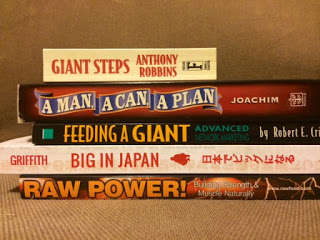
Today is the day!!! If you have been following along you know that I mentioned we would be doing this super fun poetry form today, Tuesday! So, this is an intriguing way to “create” or, actually, “find” a poem by arranging and rearranging a stack of books horizontally that show the title on the book spine into something clever that might be a “poem.” Just like creating any poetry, you get to decide if it will happy or sad, serious or funny or whatever.

Simply start perusing the titles on your bookshelves and pull out some that have possibilities and start stacking them up to see what you might discover. This seems to be a favorite poetry form. It's pretty fun. When you come up with a short stack of books with titles that lend themselves to being a poem of sorts, snap a pic, and post it for today's entries and please also type up words, line by line (title by title) so it looks like a poem as some book spines are hard to read. See the examples below. Thanks! Have Fun!! Cheers!!!!

Ready? . . . here we go!!!

Here's a very quick and rathe silly one I pulled together out of some kids' books:


“One Windy Day”                        
“Samantha Learns a Lesson”
“20,000 Leagues Under the Sea”
“Nine True Dolphin Stories”
“All about . . . Dinosaurs”


If you need more inspiration - here is a link from the “School Library Journal” where you can browse through several years of photos of book spine poetry for some inspiration, if you need ideas:

Book Spine Poem Gallery

Here are a couple more:


Giant Steps
A Man, A Can, A Plan
Feeding a Giant
Big in Japan
Raw Power


 I Dare You

The Double Cross

Counting the Cost

Don’t


 PLEASE REMEMBER ~ any poetry found on this blog, written by me, is my personal property and may not be used without my permission, other than sharing it as an example in a lesson or to read it to someone. The same goes for any poems that are shared in the comments of this blog or elsewhere online as a result of this challenge. They are the creative property of the person who writes them. These poems are their original work and no one may use them without their permission. It is understood that they own the copyright to them as soon as they create them and especially once they post them. Thanks so much!

*** Also, if you choose to post your poems on your own blog ~ that’s awesome. But PLEASE don’t just copy and paste my daily instructions, but rather post your poem on your blog or your FB wall or wherever, AND LINK BACK TO THIS BLOG POST for others to come here to read the instructions. I’ve spent considerable time researching the poetry forms and writing them up to share with you. Thanks for respecting my work and the work of others.